

NetSuite vs. QuickBooks – Which is Best?

Daniel Zvi
Choose a process that suits the size of your team and the way your business operates. Keep records consistent, review them regularly and give each person a clear responsibility. When evaluating a new tool, work through a realistic example from beginning to end. Use what you learn to decide whether the change will simplify your daily work.
Choose a process that suits the size of your team and the way your business operates. Keep records consistent, review them regularly and give each person a clear responsibility. When evaluating a new tool, work through a realistic example from beginning to end. Use what you learn to decide whether the change will simplify your daily work. Choose a process that suits the size of your team and the way your business operates. Keep records consistent, review them regularly and give each person a clear responsibility. When evaluating a new tool, work through a realistic example from beginning to end.
Overview of NetSuite
Choose a process that suits the size of your team and the way your business operates. Keep records consistent, review them regularly and give each person a clear responsibility. When evaluating a new tool, work through a realistic example from beginning to end.
 Our top picks for September 2026

 See metrics in real-time
Who Is It For?
Small businesses planning for long-term growth or managing complex operations, such as inventory and multi-location management, will find NetSuite particularly appealing.
Key Features and Benefits:
- Comprehensive ERP Capabilities: Includes financial planning, inventory management, and order tracking, all integrated into one platform.
- Real-Time Analytics: Provides dynamic dashboards for up-to-the-minute financial insights.
- Scalability: Designed to grow with businesses as they expand operations or require more advanced tools.
- Customizability: Offers tailored solutions for specific industries, such as retail, manufacturing, and professional services.
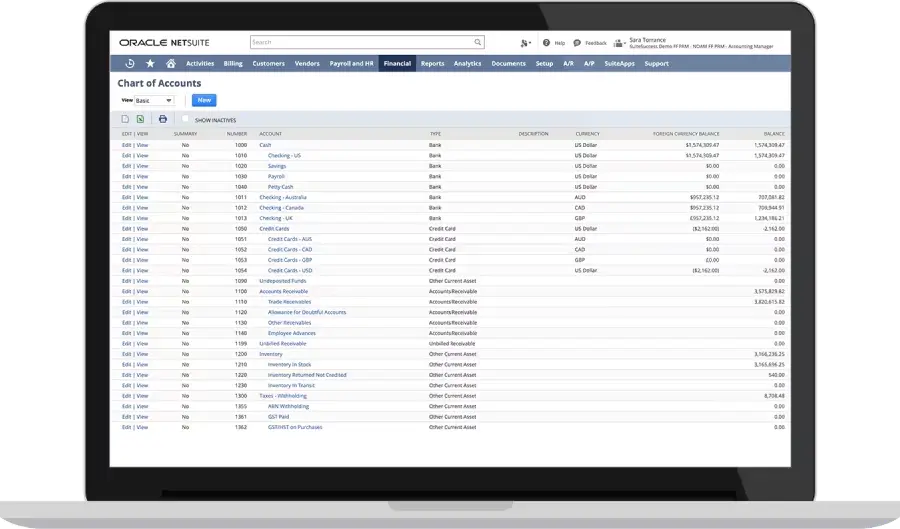
NetSuite’s strength lies in its ability to provide a unified platform that handles accounting alongside other critical business operations, making it a valuable investment for businesses with a strategic focus on growth.
Overview of QuickBooks
Choose a process that suits the size of your team and the way your business operates. Keep records consistent, review them regularly and give each person a clear responsibility. When evaluating a new tool, work through a realistic example from beginning to end.
Our top picks for September 2026

Who Is It For?
Ideal for small businesses, freelancers, and startups seeking an affordable and easy-to-use accounting solution without the need for extensive training.
Key Features and Benefits:
- User-Friendly Interface: Designed for non-accountants, QuickBooks simplifies tasks like invoicing, expense tracking, and payroll.
- Affordability: Multiple pricing tiers, including budget-friendly options, cater to small businesses of all sizes.
- Flexibility: Available as QuickBooks Online for cloud-based access or QuickBooks Desktop for businesses preferring offline functionality.
- Third-Party Integrations: Connects seamlessly with tools like payment processors (e.g., PayPal, Square) and CRMs for streamlined workflows.
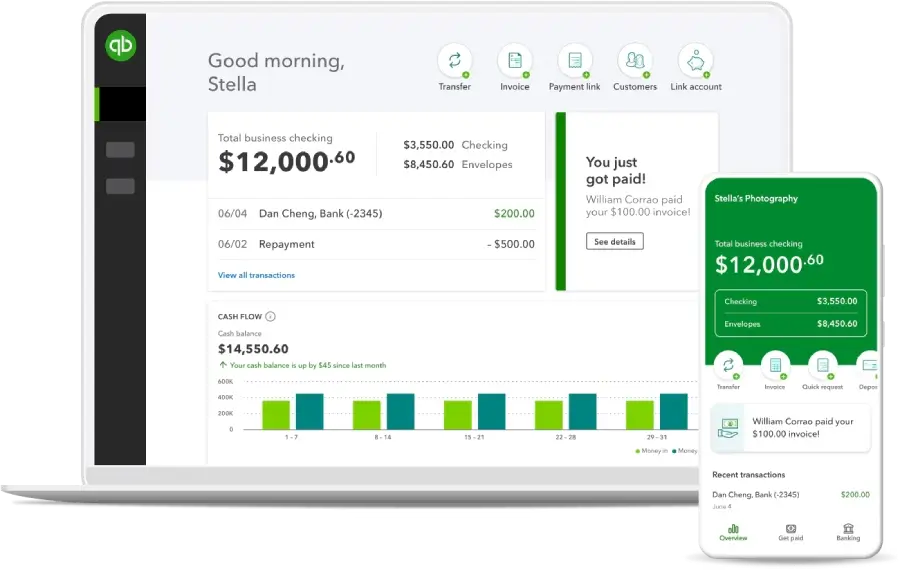
QuickBooks stands out for its focus on simplicity and affordability, making it an excellent choice for small business owners who want to manage their finances efficiently without breaking the bank.
Comparison of NetSuite and QuickBooks
Choose a process that suits the size of your team and the way your business operates. Keep records consistent, review them regularly and give each person a clear responsibility.
1. Pricing
NetSuite
Start by listing the tools and user accounts you need today. Compare the regular subscription price with any introductory offer, then check the cost of additional services. A trial is useful for testing your daily workflow before choosing a plan. Review billing terms directly with the provider and allow room for your business to grow. Start by listing the tools and user accounts you need today.
QuickBooks
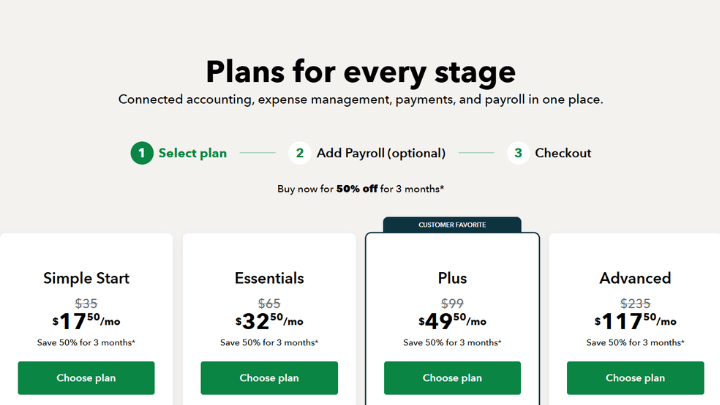
QuickBooks offers transparent tiered pricing that is better suited for small businesses with predictable budgets:
- Simple Start: $35/month
- Essentials: $65/month
- Plus: $99/month
- Advanced: $235/month
Start by listing the tools and user accounts you need today. Compare the regular subscription price with any introductory offer, then check the cost of additional services.
Verdict
Start by listing the tools and user accounts you need today. Compare the regular subscription price with any introductory offer, then check the cost of additional services.
2. Features
NetSuite
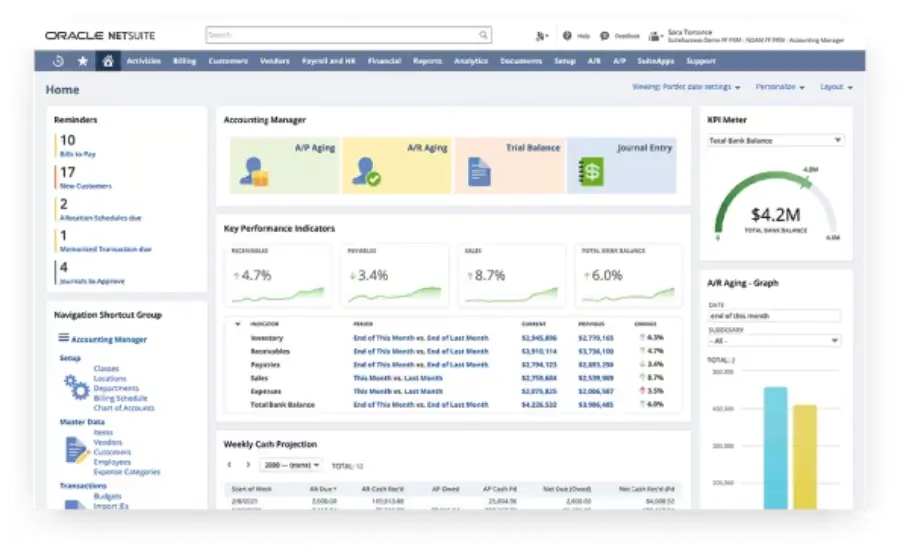
NetSuite is a cloud-based ERP platform that integrates accounting with other critical business operations:
- Advanced financial management tools, including revenue recognition and multi-currency support.
- Real-time reporting with customizable dashboards for in-depth insights.
- Inventory and order management capabilities, which are especially valuable for businesses with complex supply chains.
QuickBooks
QuickBooks is renowned for its core accounting functions, tailored for small business needs:
- Features include invoicing, expense tracking, and tax preparation.
- Higher-tier plans add inventory tracking and project profitability analysis.
- QuickBooks integrates with popular tools like PayPal and Stripe for seamless payment processing.
Verdict
NetSuite features are designed for growing businesses that require ERP-level functionalities, while QuickBooks features focus on small businesses seeking simplicity and ease of use.
3. Ease of Use
NetSuite
Consider how your team will learn the software and get help when questions arise. Explore the help centre, check the support channels and look for examples relevant to your business.
QuickBooks
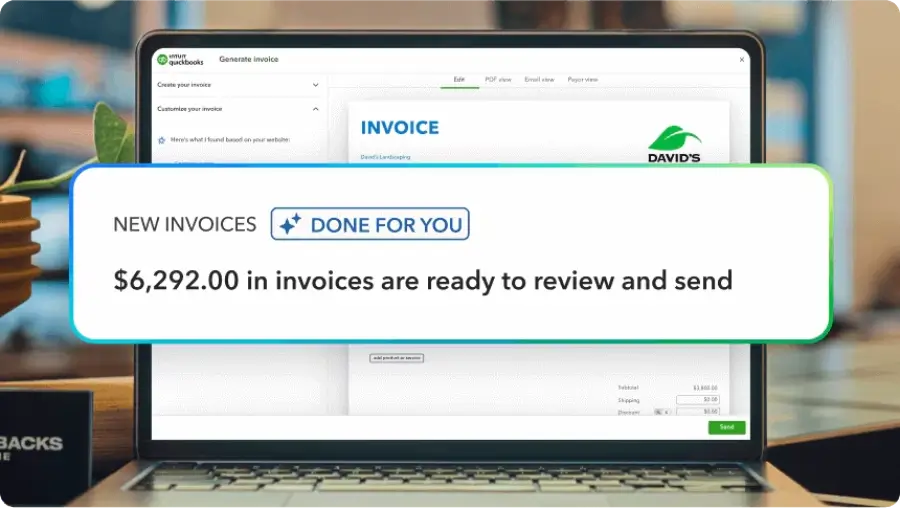
QuickBooks is celebrated as one of the best accounting software for small businesses due to its user-friendly interface. It is designed for non-accountants, with guided setup processes and helpful tutorials.
Verdict
For ease of use, QuickBooks for startups and small businesses takes the lead, offering an intuitive experience that doesn’t require extensive training.
4. Scalability and Integrations
NetSuite
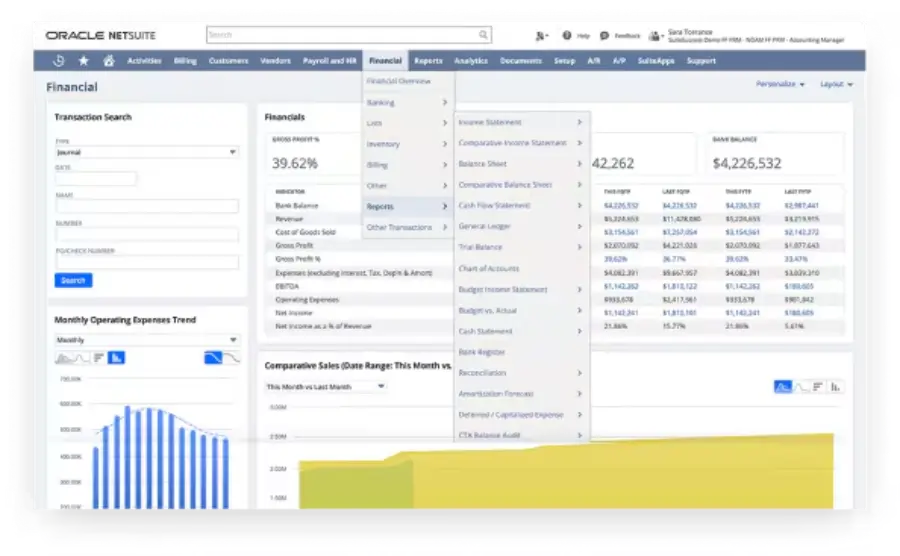
Connected tools can reduce repeated work across your business. Before enabling a connection, review which records it shares, how often information updates and who can access it. Test the connection with a small set of sample records.
QuickBooks
Connected tools can reduce repeated work across your business. Before enabling a connection, review which records it shares, how often information updates and who can access it.
Verdict
NetSuite ERP for small businesses excels in scalability, while QuickBooks integrations for small business are sufficient for companies with more modest needs.
5. Customer Support
NetSuite
NetSuite offers various support options, including phone and email assistance, as well as access to a robust user community. Businesses can also leverage training resources to maximize the platform’s functionality.
QuickBooks
Consider how your team will learn the software and get help when questions arise. Explore the help centre, check the support channels and look for examples relevant to your business.
Verdict
Both platforms offer strong customer support, but QuickBooks support for small businesses is more readily accessible and tailored for non-technical users.
NetSuite vs. QuickBooks Compared Side By Side
| Category | NetSuite | QuickBooks |
| Best For | Growing businesses needing advanced ERP features and scalability. | Startups and small businesses seeking an affordable and user-friendly accounting tool. |
| Pricing | Custom pricing based on business needs. | Transparent plans starting at $35/month (QuickBooks Online). |
| Key Features | ERP integration, advanced financial tools, real-time reporting, inventory management. | Invoicing, tax prep, expense tracking, and project profitability analysis. |
| Ease of Use | Steeper learning curve, requires training for full utilization. | Intuitive interface suitable for non-accountants. |
| Scalability | Highly scalable for growing businesses with complex needs. | Scalable to a point but primarily suited for small to medium-sized businesses. |
| Integrations | Extensive third-party integrations and Oracle product compatibility. | Seamless integration with tools like PayPal, Stripe, and CRMs. |
| Customer Support | 24/7 support for higher tiers, extensive training resources, and user communities. | Live chat, phone support, and an accessible knowledge base tailored to small businesses. |
The Role of Accounting Software for Small Businesses
A clear view of your accounts starts with a workflow that fits your business. Bring invoices, expenses and financial reports together, then review the details that matter to your team. Compare the available tools, try the everyday tasks yourself and choose a setup you can maintain as your business grows. A clear view of your accounts starts with a workflow that fits your business.
Key Benefits of Accounting Software
- Automation and Efficiency:
Repetitive tasks like invoicing, payroll processing, and expense categorization are automated, saving business owners valuable time and reducing the risk of manual errors. - Actionable Insights:
Real-time reporting and analytics allow business owners to track cash flow, monitor expenses, and make informed decisions to drive growth. - Tax Preparation Made Easy:
Tools like QuickBooks for small business simplify tax calculations and documentation, helping businesses meet deadlines and avoid penalties. - Cost-Effectiveness:
Affordable accounting tools, such as QuickBooks Online, deliver robust functionality without the expense of hiring a full-time accountant.
How NetSuite and QuickBooks Fit In
Both NetSuite and QuickBooks address the unique needs of small businesses:
- NetSuite: Offers comprehensive ERP capabilities, integrating accounting with inventory management, order tracking, and real-time reporting. This makes it ideal for growing businesses that require scalability and advanced tools.
- QuickBooks: Focuses on delivering user-friendly, essential accounting features such as invoicing and tax preparation, making it a top choice for startups and smaller businesses.
Choose a process that suits the size of your team and the way your business operates. Keep records consistent, review them regularly and give each person a clear responsibility.
Final Thoughts
Choose a process that suits the size of your team and the way your business operates. Keep records consistent, review them regularly and give each person a clear responsibility.
- NetSuiteChoose a process that suits the size of your team and the way your business operates. Keep records consistent, review them regularly and give each person a clear responsibility. When evaluating a new tool, work through a realistic example from beginning to end.NetSuite Review.
- QuickBooksChoose a process that suits the size of your team and the way your business operates. Keep records consistent, review them regularly and give each person a clear responsibility. When evaluating a new tool, work through a realistic example from beginning to end.QuickBooks Review.
Choose a process that suits the size of your team and the way your business operates. Keep records consistent, review them regularly and give each person a clear responsibility. When evaluating a new tool, work through a realistic example from beginning to end. Use what you learn to decide whether the change will simplify your daily work.
Regardless of the choice, implementing accounting software is a step toward greater financial control and business success. Explore our comprehensive reviews to find the solution that aligns perfectly with your business goals
Our top picks for September 2026
Liked this article?
Daniel Zvi
Smart Recommendations